
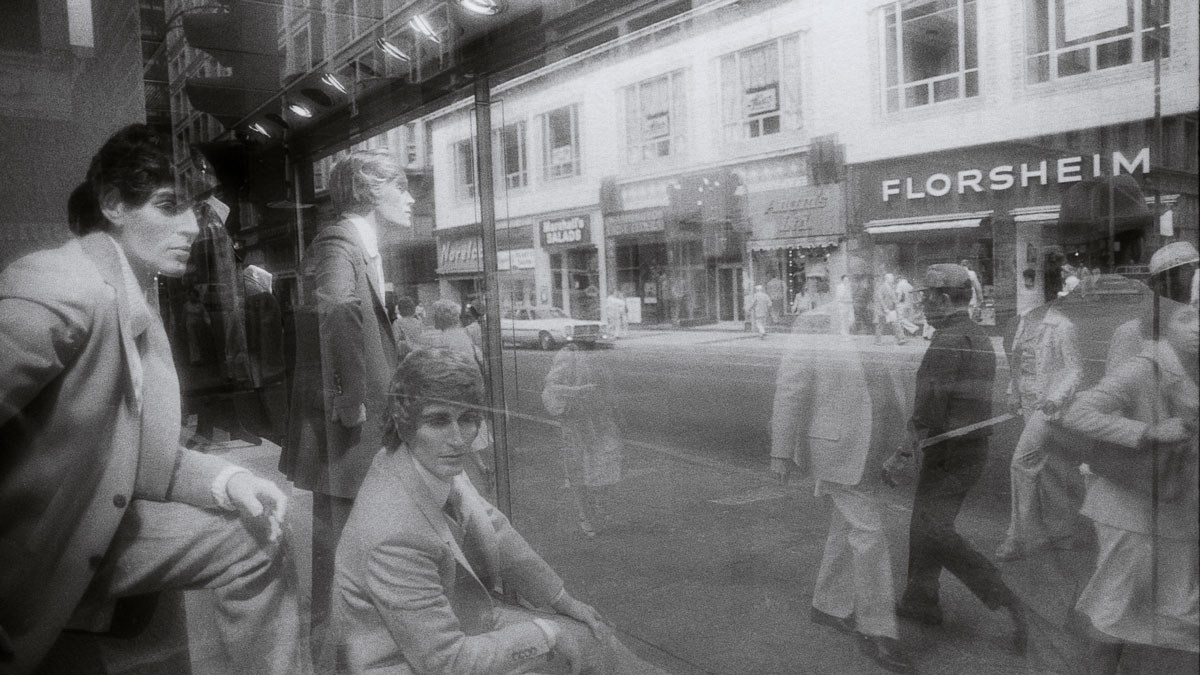
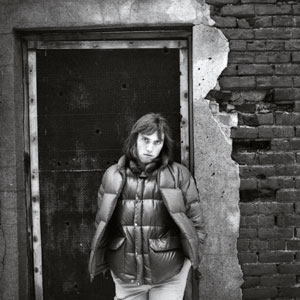
Professional and personal photographs by SIU Carbondale alumnus the late Ray Howk (pictured), including from a Macy’s window display, are part of an exhibition this fall at Sharp Museum. A discussion of Howk’s work is Sept. 12 in the museum auditorium. (Photos provided)
August 25, 2026
SIU’s Sharp Museum exhibition will highlight photographs by alumnus Ray Howk
CARBONDALE, Ill. — The photographic work of an SIU Carbondale alumnus who turned activities on city streets into his own playground will be highlighted in an exhibition starting next month at Southern Illinois University Carbondale’s Sharp Museum.
“Ray Howk: Illuminating Happenstances and Seeing the Unseen,” a series of more than 35 framed black-and-white photographs by the late Ray Howk, will be on exhibit in the museum’s South Hall Study Gallery from Sept. 8 to Dec. 11. A discussion by Kelly Fisher-Bishop of Howk’s infrared street photography of downtown St. Louis during the late 1970s and early 1980s is set for 1 p.m. Saturday, Sept. 12, in the museum auditorium.
Howk graduated from SIU Carbondale with a degree in photography in 1980. Well-known in the advertising community in St. Louis, Howk — who died in 2014 — rarely showed his personal work other than to a few close friends, said T. Lance, the museum’s curator of exhibits. He worked as a photographic assistant to commercial photographers in both St Louis and Chicago and as a photographer in several studios. Howk then opened his own studio in St Louis, and when it closed continued to assist photographers in the city.
Fisher-Bishop’s research includes archival research and interviews, along with examining his work as “both artistic expression and historical record,” Lance said.
“Drawing on Ray Howk's remarkable body of work, her upcoming lecture offers a unique perspective on St. Louis' past through the people, places, and moments captured by his camera,” Lance said.
A glimpse at a changing St. Louis
Fisher-Bishop, who is from St. Louis, said her lecture will focus on a time when St. Louis was undergoing a “significant economic, social and physical change.”
 “I’ll place his photographs within that historical context and explore what they reveal about a city caught between decline and renewal, preservation and redevelopment, and the past and the future,” Fisher-Bishop said. “I’m particularly interested in the way Ray captured not only the changing urban landscape, but also the ordinary people who inhabited it. His photographs offer a unique visual record of both the physical transformation of downtown St. Louis and the experience of everyday life within a city in transition.”
Fisher-Bishop said her interest in Howk’s work began while she was taking a graduate course on American photography at Washington University in St. Louis. She needed to select a photograph or body of photographs and examine them within their historical and cultural context for the assignment.
“He photographed ordinary people, streets, buildings, and fleeting moments of everyday life,” she said. “The more I researched what was happening in St. Louis during this period, the more I realized how much his photographs could tell us about the city and the people who experienced those changes.”
‘An escape to imagine’
Antonio Martinez, the exhibition’s guest curator, said Howk’s photographs might have remained lost in a farmhouse in Red Bud, Illinois, if not for a commitment by Howk’s close friend, Todd Davis, to “recover and champion” the work.
The collection is primarily of scenes from the downtown streets of St. Louis and Chicago’s tourist area along Lake Michigan, Martinez said, noting about one-third of the pieces are “curious storefront window reflections that juxtaposed stylish mannequins against the everyday pedestrian hurriedly passing by through the city.”
Martinez — an associate professor of photography and intermedia arts in SIU’s School of Art and Design — said in talking with Davis and learning more about Howk’s life, as a student and professional commercial photographer, it was clear that Howk’s personal work “was an escape to imagine and to transform ordinary views into uncanny ones, the kind where glowing radiances emerge from shadowy abysses.”
Howk’s “masterful use of high-speed infrared black and white film transforms such commonplace scenes into alternate realities in that the mannequins appear more spirited than the shopper or business employee,” Martinez said.
“The everyday streets were his playground and the people inhabiting them were his unassuming subjects,” he said. “It's as if Ray playfully casted a magic spell with his infrared film, whether he held his camera's viewfinder to his eye for careful study, or often times, held at waist level so that his unassuming subjects appeared more authentic and present in their own thought and self- attention,” he said.
Museum hours
For more information on the exhibition, contact Lance at 618-453-5388 or t.lance@siu.edu or visit museum.siu.edu. Sharp Museum hours are noon to 4 p.m. Tuesday through Friday and 1-4 p.m. Saturday. The museum is closed on Sunday and Monday, and during all SIU breaks and holidays.
As with all exhibitions, the artwork represents the viewpoints of its creators, not SIU. SIU complies with the Illinois Governmental Ethics Act and State Officials and Employees Ethics Act.