May 22, 2026
SIU’s Pontikes Center is unique analytics and AI training ground helping students, industry
CARBONDALE, Ill. —The world today is full of information – immense data sets – but the tricky part is figuring out what the wealth of facts and figures means and how to apply it.
At Southern Illinois University Carbondale’s Pontikes Center for Advanced Analytics and Artificial Intelligence, students are immersed in experiences that meld research, artificial intelligence and analytics in meaningful, hands-on experiences that mean something in the world.
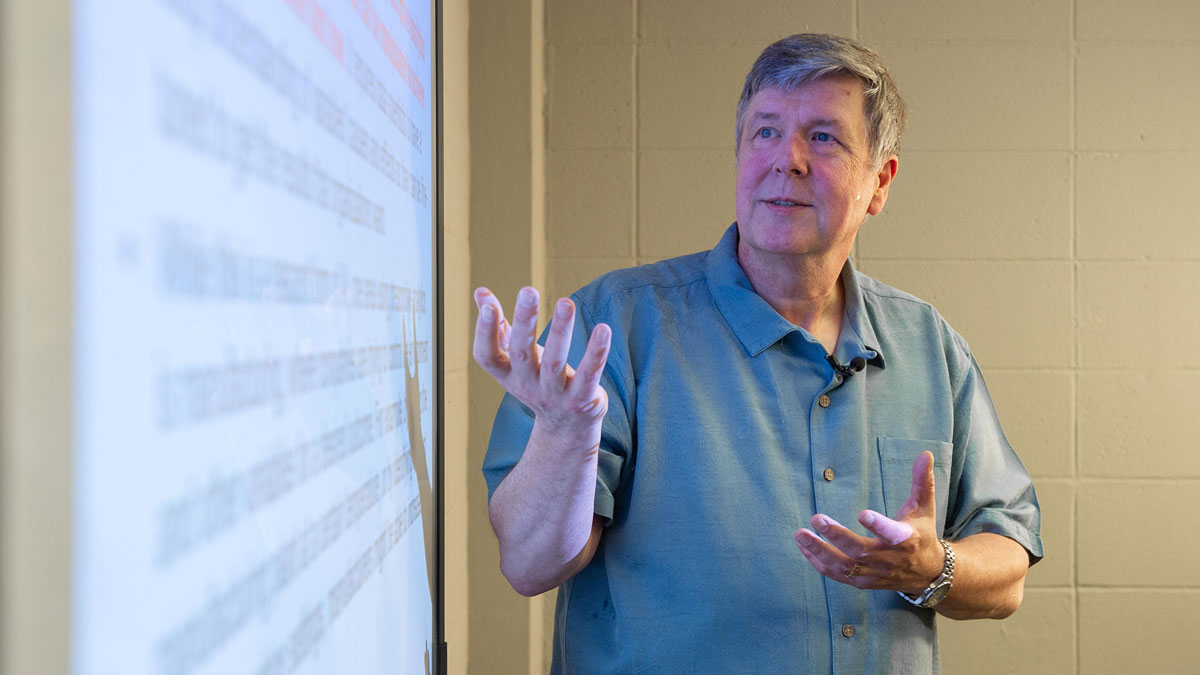
“We’re creating translators – people who can translate technology and data for the business world,” said Jim Nelson, Rehn professor of business analytics, business analytics program coordinator and director of the center, a unit of the College of Business and Analytics.
Nelson said in today’s evolving world of business, there is a huge need for people to fill these roles. “Every business person has to make decisions. It’s better for them and the company if they do it based on data instead of hunches. Our program enables them to become data scientists, analyzing and deciphering the data and translating it to a language that is understandable to others in business to enable them to make the best decisions for the business. It’s about how management talks to data science and learns from it – and we are producing the translators. Managers and employees come up with real world problems and questions, and then our students apply data science to get the analysis and information companies need -- and they’re prepared then to do this as professionals.”
Experience talks
Dr. Shreepada Tripathy, associate professor of clinical pediatrics and pediatrician at the SIU School of Medicine and St. John’s Children’s Hospital, got involved with the Pontikes Center as a student while taking online classes to complete his MBA and was so impressed, he continues to be involved, serving on its advisory board.
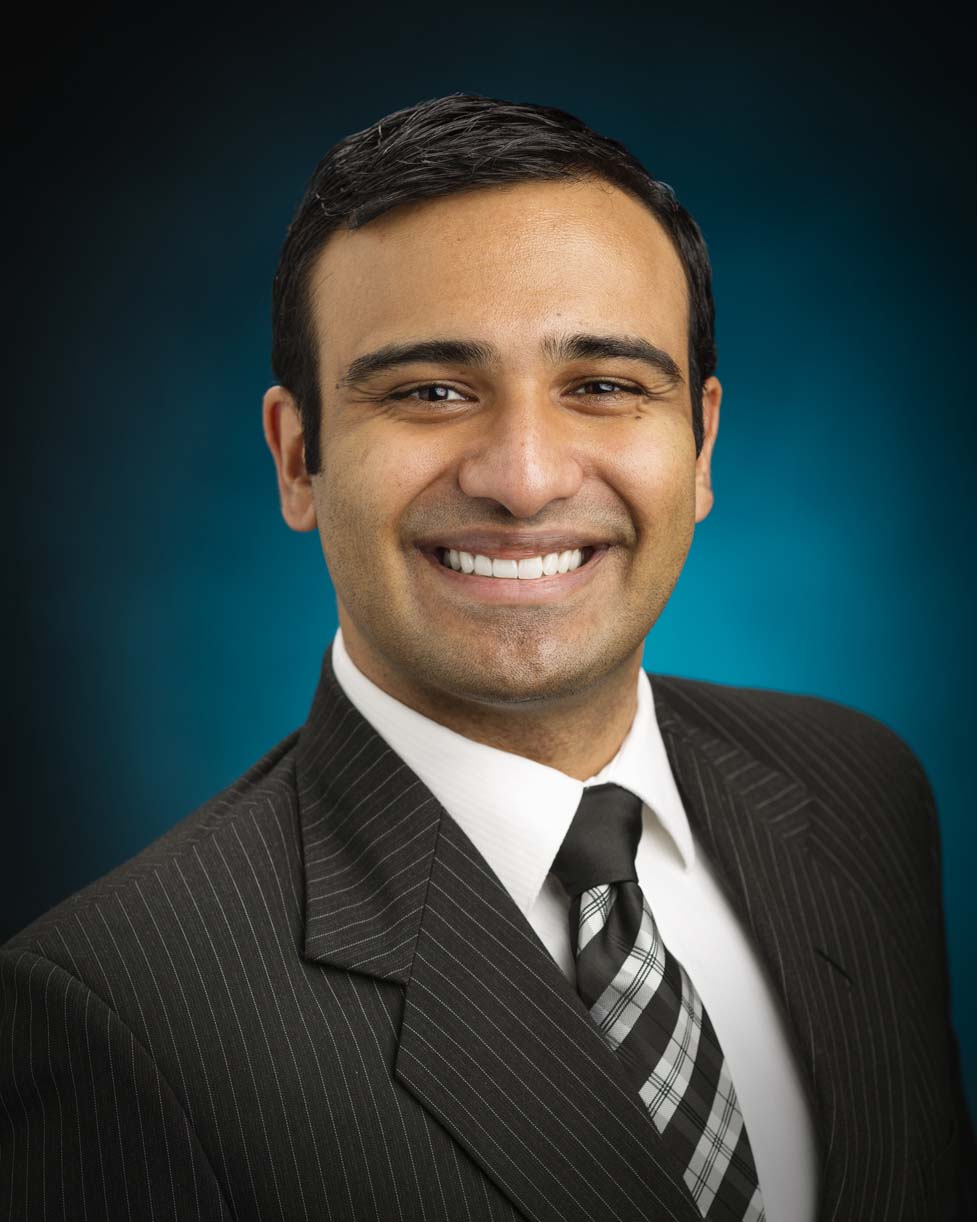 “I think the center is pretty amazing,” Tripathy said. “Jim has assembled a board that is really diverse. The caliber of people the board has and the level of education, experience and expertise they represent makes this center a leader in the nation, providing an incredibly valuable resource for students.”
The advisory board members come from a wide variety of industries and businesses, including engineering, finance, entertainment, education, big business, small enterprises, healthcare and non-profit organizations – companies including Boeing Company, Ceasars Entertainment, Caterpillar Inc., Deloitte, CME Group, Guidehouse, St. John’s Children’s Hospital and the Wells Foundation, Nelson said. They play several critical roles in the success of the students and the center – giving advice and recommendations regarding academic coursework, offering internships, mentoring students, supplying data and other help to enable students to learn doing real-world projects.
The idea is bringing the theoretical and applied worlds together, using an integrated, analytical approach, Nelson said.
“We want to have a really strong connection between academics and industry,” Nelson said. “They help us make adjustments to our program quickly to meet real-world needs.”
In his professional capacity, Tripathy has worked with SIU students from the School of Medicine on a variety of projects to help patients.
One project compared pediatric obesity before, during and after the pandemic, cross-examining the impact of where people lived to look for health disparities.
He’s also looked at food insecurity and food ‘deserts’ that occur in areas where people live a considerable distance from grocery stores, by using AI for mapping zip codes, analyzing data resources and more. He said there are large data sets available, but it’s difficult to dissect and analyze the information. That’s where AI comes in. Once AI analysis is complete, the researchers can further analyze and interpret the data.
“My role is figuring out what the data is telling us and determining if there are interventions available to make things better for people,” Tripathy said. “The Pontikes Center and COBA do a very nice job in training the next generation of students to be uniquely positioned at the forefront of data analysis and AI.”
Enhancing student learning
Student projects run the gamut, from analyzing traffic and roads in the Nashville, Tennessee, area to looking at how to improve 911 call response times in metropolitan areas. Some have had a sports focus, including looking at baseball statistics and correlating them to professional sports potential – the student who completed that project subsequently served an internship with the Milwaukee Brewers and later went to work for the team. Another project focused on football skills at various team positions and how that translates into NFL possibilities.
In another project, an SIU researcher reviewed medical symptoms, analysis and treatment via data sets to look for ways to improve oncology treatment and success in childhood cancer cases. And yet another SIU researcher examined consumer data and product reviews, helping determine which reviews came from real purchases and which were AI-generated – useful information for companies such as Amazon.
“For their analytics capstone, students take a project from start to finish,” Nelson said. “They are presented with a real-world problem and must analyze facts, figures and data to find solutions.”
From basketball to business and helping other Salukis
Ian Stewart’s SIU connection is personal – he played basketball at SIU while earning his accounting degree in the early 1990s under Rich Herrin and went on to earn his MBA at the university in 1999 – so he is happy to be helping SIU and current students.
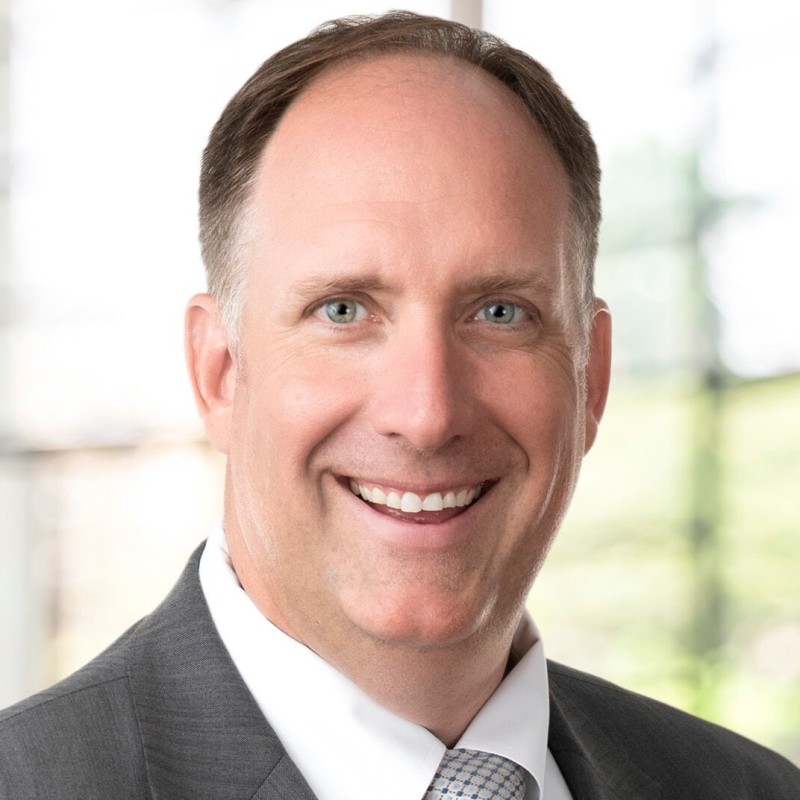 Currently a partner in Guidehouse LLC, a global professional services and consulting business utilizing AI and technology, Stewart is convinced there’s great value in the Pontikes Center and data analysis skills taught at SIU.
“If you come out of school with beneficial skillsets, you are marketable with businesses and that’s what this program is all about – that’s the value, making students more marketable, employable and sustainable,” Stewart said. “There is no shortage of people who can build the data, but we need people who can analyze the data and deliver operational improvements. This program helps students learn to do that.”
Stewart, a member of the center’s advisory board, has worked with SIU students on various projects at his current company and with previous employers.
Benefitting students and business
Jason Losser, vice president of Marquette Transportation, got involved with the center several years ago following a networking event where he had a productive discussion with Terry Clark, marketing professor and former dean. Losser said he was happy to join the board of advisers because the opportunity “aligned well with my professional background and passion for advancing analytics in academia and industry. The relationship between the classroom and industry is symbiotic and mutually beneficial. For students, this partnership provides invaluable insights into current industry practices and trends, bridging the gap between theoretical knowledge and practical application.”
He said there are benefits to the business/corporate world as well.
“From a business perspective, it offers us access to a pool of exceptional talent, allowing us to engage with high-potential individuals and cultivate a robust talent pipeline,” Losser said. “This collaboration ensures that academic curricula remains relevant to industry needs while simultaneously preparing students for successful careers in analytics. Our partnership fosters a more collaborative and enduring relationship between academia and industry that transcends the traditional paradigm of interviews and internships. This approach creates a continuous dialogue and exchange of knowledge, promoting long-term engagement and mutual growth. It allows for deeper integration of industry perspectives into academic programs and facilitates more meaningful contributions from the business sector to educational outcomes. This sustained interaction not only enhances the learning experience for students but also ensures that industry partners can play a more substantive role in shaping the future workforce. The center bridges the gap and gives students a competitive advantage in the job field.”
Nelson’s expertise and ability to bridge the gap between the two sectors has been very instrumental in the success of Pontikes so far, Losser said.
“A key strength of SIU’s analytics program lies in the flexibility Dr. Nelson has adeptly incorporated,” Losser said. He said through liberal dialogue with industry leaders, allowing dynamic adaption of the curriculum to address industry and community needs while maintaining an appropriate workload for students.
“This adaptability ensures the program remains cutting-edge and relevant, preparing students for the evolving demands of the analytics field,” Losser said.
He and his company have illustrated their commitment to fostering industry-academic collaboration by implementing a comprehensive internship program -- and last year hired an intern from SIU’s analytics program. It was a mutually beneficial arrangement that gave the company an opportunity to evaluate potential future talent as it benefitted from the meaningful contributions of the student intern. Meanwhile the intern received substantial hands-on experience with technologies and skills highly valued in the industry – including business intelligence tools, Python for data analysis and automation, and SQL for database management and querying, Losser said.
Constantly evolving
Originally created as the Pontikes Center for Management of Information in 1989 with a $75,000 donation from Comdisco Inc. and a subsequent $1 million donation through the SIU Foundation by Kenneth N. Pontikes, a 1963 alumnus, the center is ever evolving. It began by leading the way in advanced information management at a time when dial-up internet was just four years old, Nelson notes.
In 2016, Nelson and Clark spoke about a shared vision for the future. The center was revitalized the next year. Since the rebranding, the Pontikes Center has been actively developing and delivering new programming.
“We collected data from analytics program all over the country to see how we stacked up,” Nelson said. “Many just rename statistics classes, pack together existing classes and call it a bachelor’s degree in business analytics. We wanted to make sure we do it right, and that’s how the Pontikes Center was reborn. From what I’ve seen, we’re the best, or at least one of the best. We’re about the only one with an integrated AI program. Analytics and AI intersect here.”
SIU now offers both bachelor’s and master’s degrees in business analytics, a master’s level certificate in analytics for managers – created specifically in response to business needs, Nelson said – along with an analytics minor that students of all majors are adding to their academic arsenal, and an MBA concentration in analytics for managers.
In recent years, the center has shifted from program development to program delivery, working toward a full slate of research, teaching and service efforts with an emphasis on artificial intelligence and machine learning. It’s become a unique training ground and research facility for students and faculty, Nelson said.
The evolution isn’t over.
With an eye toward the future, Marc Morris, COBA dean, is working to establish a new Saluki Hub, housing the Pontikes Center, the Business Intelligence Center, a Logistics and Supply Chain Center and more in a dedicated research space near SIU’s Illinois Small Business Incubator on campus.
Details are still being finalized for the dedicated learning and research space but Nelson said it’s an exciting time for the college as the new hub will more easily bring students and faculty together to work on applied and theoretical analytics and AI and so much more.