
March 27, 2026
SIU’s Morton-Kenney Lecture examines conflict escalation and the war in Iran
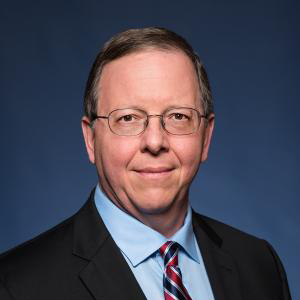
CARBONDALE, Ill. — Nationally recognized political violence and international security affairs expert Robert A. Pape will present the spring 2026 Morton-Kenney Public Affairs Lecture on Friday, April 3, at Southern Illinois University Carbondale.
An author and political science professor at the University of Chicago, Pape will present “Iran, the Escalation Trap, and the Coming Most Dangerous Election.” The lecture will connect Pape’s recent research “on the escalation of violent rhetoric and action in the United States with his substantial work on war and conflict — and how those may intersect in the coming election cycle given the Iran war,” said Darren Sherkat, a professor in sociology at SIU Carbondale.
The lecture is at 5 p.m. in the SIU Simmons Law School Lesar Law Building Auditorium. The free, public lecture will include a Q&A. The lecture is hosted by the political science program in the School of Anthropology, Political Science, and Sociology within the College of Liberal Arts, and the Paul Simon Public Policy Institute. A reception is planned from 4 to 5 p.m. Pre-registration to attend the lecture is not required but is recommended.
“Professor Pape is a specialist in conflict escalation, and he's written about why escalation matters for air warfare, suicide terrorism, and now for domestic political violence and support for violence in the United States,” Sherkat said.
Pape is “a revered and pathbreaking scholar whose research and writing commands attention from the academic and public policy communities,” said John Shaw, director of the Paul Simon Public Policy Institute.
“He writes and speaks authoritatively on the relationship between force and the attainment of political objectives,” Shaw added. “He offers profound insights about escalation strategies and the merits of various approaches to restraint. Professor Pape is also the leading expert about political violence in the United States.”
Escalation traps
 Pape’s theory on “escalation traps” is articulated in several works, including his 1996 book, “Bombing to win: Air power and coercion in war,” Sherkat said. The use of force “creates a predictable counter response for opposition groups and can lead to the justification of violence on both sides,” he said, adding there is a possibility that “escalation abroad may well induce escalation of violence at home.”
“President Trump is clearly in such a trap after striking Iran several times in previous years and now going all in to use air power to ratchet up the conflict,” Sherkat said. “The problem is there is little room for deescalation once you're in the trap. Similar processes have played out with domestic politics and using the military and paramilitary organizations to control domestic opponents.”
Pape is founding director of the Chicago Project on Security and Threats, His commentary has appeared in publications including The New York Times, Washington Post, Boston Globe and Los Angeles Times. He has appeared on broadcasts including Face the Nation, ABC News, CBS News, CNN, Fox News and National Public Radio, along with numerous social media podcasts.
Pape has been at the University of Chicago since 1999. He previously taught international relations at Dartmouth College and air power strategy for the United States Air Force’s School of Advanced Airpower Studies. He earned his doctorate from the University of Chicago and bachelor’s and master’s degrees in political science from the University of Pittsburgh.
The Morton-Kenney Public Affairs Lecture Series is organized by the Paul Simon Public Policy Institute and held each fall and spring semester.
The late Jerome Mileur, an SIU alumnus, established the series in 1995 in honor of two of his political science professors who inspired him as a student — Ward Morton and David Kenney. Originally from Murphysboro, Mileur was a professor emeritus in political science at the University of Massachusetts-Amherst.
For more information on the April 3 lecture, contact the School of Anthropology, Political Science, and Sociology at sapss@siu.edu or 618-453-3166.